Relationships are all there is. Everything in the universe only exists because it is in relationship to everything else. Nothing exists in isolation. We have to stop pretending we are individuals that can go it alone. ~ Margaret J. Wheatley
I hope by now it is clear that choosing to follow a path of True Beauty is in great part about noticing, cultivating and sustaining Beauty, an integral form of harmonious relationships. Becoming a Practitioner of True Beauty!
While relationship begins first between you and you — being the most authentic self you can be as discussed last week — the next most important and primary relationship is between you and the “Other,” or really a series of “others” whose main characteristic is that they are perceived as external of the “I.” While there is the Other of our immediate environment our first “other of flesh” is, most probably our birth family, then the family chosen and created beyond that. Thirdly are all the relationships one chooses to create just between folks and other species — pets and, say, houseplants. (I am currently in deep mourning for my 20+ year old Jade plant that is seriously ailing. I cannot admit it’s dying.)
Though all of the above may seem obvious, looking at the status of today’s families, community health, ecology and abused and abandoned animals — it isn’t. We only have to look around to see the growing anomie* in our culture.
*Anomie is the disorientation and alienation that arises in a society as a result of the erosion of its moral and social codes. People feel isolated and alone, without a supportive social or guiding framework.
True Beauty is the antidote for anomie.
Relationship is a word that has been so overused in our culture today. Perhaps because truly meaningful relationships are too scarce for too many. For instance have you noticed we now have “Relationship Brokers” in place of customer service departments in many businesses now? Too funny. Or sad.
So what is relationship really about? Hoo-boy! So many books, lectures, TV shows, gurus have gone on about this very subject! But there is actually science behind/about relationship. I’ll try to put it into non-science speak.
Relationship is about attraction and resonance. Being attracting, attracted and resonating with an other –only to find upon entering into the dance of relationship that one-plus-one equals not two, but three — and we are not talking about Baby, here!
The attraction of the two has created something bigger than the separate single units apart: the “field of attraction.” This field is the observable energy created by and between the two. Gravity is a field of attraction. I could say, quite literally, that the Moon fell for the Earth. I like that. The pull you feel towards someone is a real, energetic, observable thing.
Plato wrote about it, Shakespeare dramatized it, and virtually every culture has tradition and mythology around it; many worldwide believe that it is “love that makes the world go ’round.”
So while those millions of books have been written and therapies have been developed to help create and sustain healthy and happy relationships, at day’s (and experts’) end harmony in relationship relies upon the care and maintenance of that field. And that all boils down to “importances.” What is your order of importances? To what and where do you give time, energy and attention? How much to oneself, to the job, the sport, the maintenance of possessions, and to the journey of others around us? On what do you focus?
Ditto to the above for the Other who is creating that field of attraction with you.
And, then, just to complicate matters: can we accept the care, love and concern of an other flowing to us? We often hear of the joys of giving. But how many of us are uncomfortable with receiving? How is it to be the subject of another’s focus? Is it hard to simply say “Thank You” when someone does a thoughtful thing or pays one a compliment?
Finally, how do we communicate? How effective are both at expressing as well as listening? Effective communication is the key to authentic relationship, and successful, harmonic relationship itself is key to living a life of Beauty.
Personal relationships are not irrelevant or extra-curricular. They are a central expression of Harmony, of a life of True Beauty. In formally entering, i.e. consciously choosing a relationship with another human being we are entering the dance and mystery of the Universe itself.
Note, however, it is a core premise of the Way of Beauty that, in fact, all is in relationship. Not just human-to-human. Or man to dog. Or human to earth. All is in relationship, all the time. Being in conscious relationship, therefore, is a tall order.
To practice harmonic relationship:
1) Know that you are in relationship with all, all the time. Your energy effects the energy field of that and those around you.
2) Notice your order of importances. This is a big clue to your own attractions and resonances, if you need a clue… and often we do!
3) Focus on that which you want to include in your life and see more of in the world. If, conversely, you focus on the negative, it is the negative that will occupy your environment.
4) Communicate. You are in relationship. Duh!
5) Really, just follow all the Beauty practices as well as you can. The Way of Beauty is about increasing Harmony, the happy state of relationship.
“Consider the following. We humans are social beings. We come into the world as the result of others’ actions. We survive here in dependence on others. Whether we like it or not, there is hardly a moment of our lives when we do not benefit from others’ activities. For this reason it is hardly surprising that most of our happiness arises in the context of our relationships with others. ~HH Dalai Lama
What could be more appropriate after discussing the authentic self, than the discussion of practicing self-acceptance? Marianne Williamson says:
“Our deepest fear is not that we are inadequate. Our deepest fear is that we are powerful beyond measure. It is our light not our darkness that most frightens us.”
Hmmm.
And I very much agree with what Cormac McCarthy has to say. While speaking of courage, he hits on both awareness of one’s true self, and acceptance of that self (or lacks thereof):
“All courage is a form of constancy. It is always himself that a coward abandons first. After this all other betrayals come.”
It is a phenomenon of a wealthy society that we can even contemplate the notion of self-acceptance. That said:
Self-acceptance is a form of unconditional love. It is lovingly embracing the “needs improvement” and “unsatisfactory” along with the “excellent” and “satisfactory” on our internal report-card.
If we kid ourselves and choose to either believe that “it’s all good” as the saying goes, or conversely that it’s all crap, we are all crap — we are not being authentic with ourselves. We are living in delusion and fooling only ourselves. It is not a productive way to live.
Very few of us do not have our delusions, oh by the way.
On the extreme that tends towards the “it’s all crap” side, the gap between what we might refer to as the realm of the “coulda/shoulda/woulda’s,” the NISTs (refer to last week’s blog), and what one feels capable of, versus what we perceive as actually accomplished can feel great. The subsequent self-disappointment might make self-acceptance a prized achievement rather than a natural “given.” Through this aberrated lens, we rarely accept the self — it can always be somehow more, better, worthier.
At the other extreme, the “it’s all good” stance may birth arrogance and self delusion that can overtake an individual — sort of hiding behind the smiling mask; nothing can ever be wrong! The self is invincible, always right in some way or another. Self acceptance is a given. I like to think that most people really don’t dwell full-time in either of these extremes, but for the most part view their individual internal report card more objectively, aware of their full spectrum of “marks.”
By the way, this review/report card idea in the self-acceptance process is not about bringing up The Judge. We can be such harsh judges of ourselves, can we not? So how is this done truly lovingly and not with harsh judgment?
Be kind. Be kind to yourself. Be the loving parent to your growing self.
Self-acceptance is not about complacency. It is the sister-step in practicing Authenticity. As in all things there is a balance point to be struck; in this case between acceptance and improvement. And it is not a static point, it is often a balancing act — always moving. Acceptance doesn’t mean unchanging, rather to embrace lovingly what you cannot or choose not to change now. Change what you want to when you are able. The rest will have to wait. The balancing act continues.
photo interpretation: seizure coming on
An example: I accept that I have seizures. Epilepsy. This is a multi-faceted fact that presents obstacles and limitations in many different areas of my life. So I have had to respond in different ways. There are ways I can and have improved my personal universe. There are ways I have not, and in some instances believe I cannot. (There is no cure for epilepsy). There are other items that are still in the gray area: I just don’t know if I have the ability to change/improve them — or I am just not yet ready to confront them. I have not accepted many of the limitations traditionally placed upon people with epilepsy. Some of these are culturally instigated, others medically. My questioning of such “limitations” has caused concern for some people in my family. It has been trial and error, and I have made mistakes. Yet I learned for myself what my limits in this area were, and they too are not static but evolve as circumstances, medications, and seizure cycles change. I take my medication faithfully and deal with the side-effects (not always uncomplainingly). I try to balance personal safety with a certain quality of life. Just when I believe I have achieved a certain satisfactory balance, it can change again. At times this constant challenge feels lonely.
So, how does one acknowledge and respond to: this is my current reality, this is who I am now. How might I move forward? Do I even want to move forward? Is there room for improvement? Do I want to aspire to something more or different?
The responses to the above can form the harmony point between lovingly embracing the critical self-awareness, one’s acceptances and one’s work at self-improvement. It is a dynamic self-acceptance versus a denial as a false form of self-acceptance and blinkered self esteem that, too often, justifies unproductive behaviors and/or situations and relationships.
At one point while contemplating the practice of self-acceptance, something I knew was very important to moving with True Beauty in everyday life and living, I started asking around. How did others think about self-acceptance? Or did they? During this inquiry it was suggested to me that women and girls have a more acute issue with self-acceptance than do males. I’ve done no research to verify this, but I strongly suspect its true. The media in all its forms projects such strong and pervasive ideas and ideals about the feminine. Well, mostly about feminine physical appearance. Much has been written and observed about this over the past few decades; but it has hardly changed. You have only to walk through a high school to know that.
It is hard not to compare and contrast our own appearance with the images out there. We elevate the likes of actresses and reality “stars.” The rest of us women do not have hair & makeup minions fluttering about for two hours before our first appearance into the day. We are not able to airbrush ourselves before leaving the house. Is it any wonder our young women get confused about where their worth originates — in the constancy of character, grace and ability or simply a particular physical appearance?
And then, as one rather stiff-upper-lip sort of person put it, “Well you just do accept yourself, don’t you? What choice do we have?”
Shine on!
To practice acceptance of oneself:
1) Listen to your body and your intuition and notice where you are resisting.
2) Be fully present with the choices that are available. Choose mindfully, with authenticity and compassion.
3) Think of “failure” as another word for “rehearsal.” Trial and error is the way of artists and scientists.
4) Remember: everyone is doing their best from their point of view and level of awareness — including you.
5) Where necessary, forgive. Especially yourself.
So, what role does self-acceptance have in reclaiming True Beauty into our sensibilities and our culture? Again: as within, so without. The more accepting and loving we are of ourselves, the more accepting and compassionate we are liable to be of others.
One of the seldom mentioned keys to the spiritual life is acceptance. Not acceptance of others but of ourselves. So often we focus on what we want to change…lessen our character defects…. What if we are acceptable even in the times we have difficulty accepting ourselves? …The poet Theodore Roethke …tells us: ‘in a dark time, the eye begins to see.’ ” ~ Julia Cameron
Authentic. Authenticity. What the heck does that mean, really. And what does it have to do with True Beauty?
Each person is the barometer of his/her own authenticity; it would be an oxymoron to say there is a set way to be authentic, to practice authenticity. However, since it is my authentic (s)elf to virtually always have something to say about almost everything, here’s what I have to say about being authentic:
In our current culture one of the foremost antitheses of personal authenticity is the still deeply embedded “Now-I’m-Supposed-Tos.” (Now I’m Supposed To go to college, get a job, get married, be successful, have children, etc. to name a few of the more universal NISTs of American culture.) Ridding oneself of these “NISTs” is easier said than done, especially since there is often some merit supporting the NISTs. Logic, honoring a parent or significant other’s wishes, or keeping one’s word are a few that come right to mind. Remember, we are only speaking of such things when they are not able to be engaged with personal authenticity.
At every stage of life there seem to evolve new NISTs. As we age it might be Now I’m Supposed to settle down, act like my parents or act exactly the opposite of my parents, have achieved what I set out to do, etc., etc. NISTs can actually be wonderful when they align with our inner desires and abilities. But when they don’t, it can be hell on earth. The suppressed authentic self expresses itself through many un-beautiful ways: depression, violence, apathy, deceit — generally destructive activities for oneself and others. (Please know I am not psychologist or such, just an observer of people and life).
Happily, it seems the NISTs are relaxing. I see younger generations far less in the thrall of these cultural expectations, but I do not know if it is a blip or a trend. And they are not entirely gone. Questions about marriage, parenting, jobs vs. careers vs. something called lifestyle and the meaning of life are still persisting. In the absence of the NISTs, or their weakened position, what guidelines, positive or even otherwise are available?
And then, just to complicate the issue, there is the problem of taking one’s quest for authenticity too far. (What! How can that be? I can just hear Lou now.) To be authentic does not mean always putting oneself first. Under the guise of being “true to oneself” narcissism can bloom. Taking care of oneself (“lookin’ out for #1”) can be a cover for selfishness, lack of compassion. It is also often manipulative, immature and insecure. The difference, I think, between being authentic and being narcissistic is in attitude, action and intention. It means being aware of your actions, reactions, emotions and intentions, and yes, in the context of those of others’. Facing them, if you will, in the private moments between you and you. We live in relationship all the time: to ourselves, our environment, others. To balance this is to practice True Beauty. To be fooling yourself about who and how you are is to have a foundation of sand in all other departments. “Lying to yourself is automatically lying to everyone else” I’ve been known to say. And we do not always like to admit some of those little “white” lies we tell ourselves, do we?
Be aware of True Beauty; practice it…find and be your authentic self. No small task.
Mother, impersonating 1960’s comedienne Phyllis Diller. She loved a good costume.
To practice and hone one’s own authenticity:
1) Identify behaviors, habits that are not authentic to/for you. You probably already have a good idea about a few of them. You feel it. But if you want to go a little further, listen to that inner voice and feel that gut and heart. If it doesn’t “feel” right for you, it probably isn’t. If your reasoning/analytical mind seems to be finding justifications for a certain behavior or decision, fighting with your gut, this is a red flag. Pay attention!
2) Replace inauthentic behaviors with ones that reflect your true self and values. This will, of course, be done over time. Be patient and kind with yourself.
3) With a clearer sense of your authentic self in mind, envision how the next chapter of your life might look. Take any steps possible that are in alignment with that vision.
4) Look at the material world you’ve helped create around yourself. Does it align with your core values? If you are fortunate enough to have abundance, can you find the right balance for you between that abundance and scarcity elsewhere? Can you identify your areas of abundance?
5) Practice all of the above with compassion for those around you. Beauty is harmony, smooth transitions when possible. Let those you care for know what you are endeavoring to do. Your aspiration to live a more authentic life may well inspire them to do the same. Everything is in relationship!
Simply put, practicing Authenticity is working at “To thine own self be true.” Because here is the thing: if you don’t tell yourself your truth, you’re automatically lying to everyone else, too.
⇒And here is a bit of wisdom: the energy put into maintaining a false self is far, far greater than the energy it takes to displace it and start honoring and maintaining one’s authentic self.
Your time is limited, so don’t waste it living someone else’s life. Don’t be trapped by dogma — which is living with the results of other people’s thinking. Don’t let the noise of others’ opinions drown out your own inner voice. And most important, have the courage to follow your heart and intuition. They somehow already know what you truly want to become. Everything else is secondary.
~Steven Jobs, 2005 Stanford University Commencement Address
Beauty takes time for us to see fully. It always takes longer to hear with the heart, but the song heard there is lasting and precious.
~ Mark Nepo
“It broke my heart!”
“That went straight to the heart of the matter.”
“It really touched my heart.”
“I’m heartbroken!”
“I heart you”
Sound familiar? Ever said or written such yourself? We all have, I bet. Up until several years ago I thought these just colorful expressions; that there was nothing really going on with one’s heart muscle, aorta and such. Then two things happened that radically changed my mind.
The first occurred years ago while doing research for my Masters thesis. It led me to one of my still-favorite resources, the Institute of HeartMath. It turns out there’s actually quite a bit of science to support the existence of ways of knowing and understanding that we have habitually discounted. And heart-related matters are, er, at the heart of it. We do perceive, feel and think using our hearts. The organs of the body have their own electromagnetic fields (EMF) and:
The heart is the most powerful generator of electromagnetic energy in the human body… . The heart’s electrical field is about 60 times greater in amplitude than the electrical activity generated by the brain. … Furthermore, the magnetic field produced by the heart is more than 5,000 times greater in strength than the field generated by the brain, and can be detected a number of feet away from the body, in all directions. ~www.heartmath.org/research
Further, the neural network that most of us were educated to believe was the purview of the brain alone is in fact a web throughout our entire body. Folk wisdom in many cultures has always referred to the heart as a center of knowing, wisdom and feeling. Now our God of Science has validated that knowingness with the astounding data that the heart has a greater electromagnetic field than the brain; and an abundance of neural networks. We do, indeed, think and feel with our hearts. And what we have deemed “intuition” is probably information coming to us via these fields and networks.
The second thing that happened was a personal experience. A non-physical traumatic event occurred in my life and it had, among others, this very physical effect: my chest hurt. Badly. It lasted for several months. I had no idea what this constant physical pain was. Doctors sent me to the ER, more than once, sure I was having a heart attack. It was then I realized that those “colorful expressions” were not merely metaphors, but accurate statements of a real physical response to emotional pain. My heart was broken.
The heart feels, emotes…we are not brain-centric thinkers or feelers. I believe that what we call “intuition” is, in fact, information/knowingness coming to us before being processed by the brain. It is coming to us via the EMFs of our organs, most predominately our heart. We need only heed it.
To practice thinking with your heart:
1) Listen for and to your “inner voice.”
2) As you notice those “thoughts” and impulses you’ve previously labeled intuition speak them aloud and/or write them down. This is a form of acknowledgement, honoring and validating such knowing/gnowing.
3) Try acting on your intuition when possible. Notice the outcomes.
4) Choose to be around what I call “higher companions;” those people who tickle your laugh muscle, lighten your spirit and encourage spontaneity. Who at the same time do not back away from helping you shine a light on your demons. Who tend not to scoff at your intuitions and will encourage you in your endeavors and your challenges. Whose only criticism, when it comes, is insightful, delivered with compassion and always constructive in nature. You’ve heard yourself think or say about them “I just LOVE being with (insert name here). You strive to be the same for and to them. Such friends nurture our hearts and our heart-thinking.
So, in summary, it is time to stop dismissing that which we label “intuition.” It is knowing from a different source. It is “gnowing.” If something is calling to us, moving or inspiring us that seemingly has no “logical” source — so what? Get over it! Release that criteria. Practice thinking with your Heart. And acting on those thoughts/feelings. Allow yourself. To do so creates greater inner harmony, a requisite state in turn for creating True Beauty outside oneself.
The intuitive mind is a sacred gift and the rational mind is a faithful servant. We have created a society that honors the servant and has forgotten the gift. ~ Albert Einstein
My mischievous friend Lou came in today and asked me what I was doing spending another beautiful morning at my computer. Good question. I reminded him that I was doing this blog about the importance of recognizing True Beauty, and how to actually practice it and incorporate it into everyday life.
Lou is a major skeptic. Like many, he dismisses beauty; thinks it is trivial. He is confusing (I think) mere glamour for true, deep abiding beauty.
So we have these discussions. It’s been really good for me, actually, as over time he has taunted me about the tenets of True Beauty. It made me realize that this was not some pop-ideaology with which I was infatuated for a brief time, but something that I truly believed and continued to be passionate about. Something born in me, of me. I need to share this with others; I feel it is so very important in healing both ourselves and the earth.
When I say things like that, Lou says I sound pompous as hell. In the face of adolescent Lou-truth I am nothing if not under scrutiny. Which has proved a good thing. My own personal challenger. Gotta love it.
And I love that it has worked its magic. That I have come to understand that Beauty, True Beauty — not the shallow “glamour” that passes for beauty these days — is the very accessible road to a healing harmony for everyone. I’ve done my share of traveling; I’m not naive about the poverty that exists on the globe. And I believe that it is the awareness of True and deep Beauty that contributes to those impoverished lives the bit of spiritual serenity and harmony available to them in their struggle to survive. The ability to tap into it may befuddle those who are better-off . But herein lies a long essay. Not for now. And Lou is scrunching up his face, feeling his question is unanswered.
Why am I inside opposite a glowing screen instead of outside practicing what I preach? Because, sweet Lou, a thread throughout all the Beauty practices is discipline and balance. I am being true to myself by sharing what I gnow (not a typo) about the importance of True Beauty. I’ll go to the beach to “pray” and play later.
So to you who find yourself on this blog page, a reminder: I write here to share my conviction that True Beauty is a necessary tool in the balanced functioning of our earth and universe. It might even be the raison d’être of our universe. We can participate and practice it every day, incorporate it easily into our daily living with simple shifts of perception and/or attitude, with our choices, in our relationships.
Wowza! I want you to recognize, nurture and sustain True Beauty in your personal universe. I want you too to practice True Beauty! It is important to engage now. What’s more, it is fun, fulfilling and so full of grace…
This Beauty Practice is in response to years of our society operating in an “either/or” mentality. It is one of the major constructs of our automatic pilot reflex. But we do not have to live in the polarizing “either/or” paradigm. All around us is evidence of a both/and reality, reminding us that we live in a truly diverse, amazingly inclusive and paradoxically complex universe. Think sweet and sour, acid and alkaline, yin and yang, black and white, orange and blue, fire and earth… the list goes on and on. It is not a divisive either/or, but the considered balance of both/and.
We can practice living in such a place. And once aware of it, we find it is beautiful, balanced, full of harmony — and yes, as well as the cacophony of chaos (but more about that later).
To Practice living in the Both/And Universe:
1) Notice each time you make a choice between one event (thing) and another. Does one really preclude the other?
2) Notice when you tend to disagree with someone and see if you can allow that viewpoint to co-exist with your own, allowing both to be. You needn’t agree — just let be.
3) Try dismissing time (that most stern driver of eliminations). Go forward without looking at clocks, but listen to your body’s needs/clock instead. You might find greater “time” to include more.
4) Challenge yourself: where have you, through habit more than choice, excluded something? An idea, a doingness, or someone’s company — because you believed that it was an “either/or” circumstance. Was it truly?
I am very much an advocate of making clear choices for ourselves. This is not about undermining that. What practicing living in the both/and universe is about is refining our process to reach those choices. A both/and “personal universe” is richer, deeper and more inclusive. More aware of the field of infinite possibilities. It provides more insight into the dynamics of True Beauty. The sharp knife of an either/or situation is still in the proverbial toolbox; it simply should not be used as unconsciously or as rapidly as we sometimes do.
This is one of my favorite Beauty practices. In part because it has a certain shock factor for some people first hearing of it and I can be mischievous. But mostly because it is a constant practice for me. It is a constant challenge to my daily operating assumptions. (My “doa”s?? Hmmm).
I don’t really believe in “truth” as I understand adherents of Science and the Age of Reason to use/define it. I find truth to be relative, subjective. This shocks my fundamentalist friends — whether they be vegan, Christian, Scientologist, or Democrat… .
A man of science who I heard speak once revealed that he and other scientists and researchers held a particularly skeptical attitude towards scientific theory: “SAFN,” an acronym for Somewhat Adequate For Now. To wit: inquiry into a realm of the largely unknown (say, quantum physics or deep space) would go on until an apparent pattern or story began to form from clues and evidence that was gathered over a period of time. Said story was then extrapolated into a probable scenario and, with a certain amount of agreement among the parties involved, deemed a bona fide “theory.” The definition for theory is “speculation, assumption, conjecture.” Left unchallenged by new or different speculation, assumption, etc., said theory starts to be assumed “truth” by the general public, and SAFN by the scientific communty. Often it is the very longevity of a theory that seems to be their proof. Think Big Bang Theory or the Theory of Relativity. Once it was the theory that the sun revolved around the earth…or that the earth (clearly!) is flat. You get the idea.
So what is true?
The concept of truth is, actually, very useful. It helps create our shared reality, core ethics and intent. However, the universe is expanding as it must, including all the dogmas, doctrines, “truths” that have gone before, are currently in vogue today, and those truths that are awaiting our discovery of them.
Currently we live in the Age of Reason, Logic and Science. I hold that in some ways it is the Dark Age of Reason and Science in that it disallows so many other ways of knowing. Specifically “gnowing.” Gnowing? Many indigenous cultures take for granted inner knowingness — gnowing is that way of discerning a current truth or sensing True Beauty through these many other conduits of garnering information. We often associate these “other conduits” to body parts: heart, gut, third eye. Some just toss it off as intuition.
To Practice “truth wariness:”
1) Be flexible in your perspective on truth. Challenge your own assumptions about the nature of a person, place, or thing.
2) Become aware of historical shifts in “The Truth”. Educate yourself about different belief systems. Reject anything touting itself as an “absolute truth” (including this statement).
3) Listen deeply to yourself; express your own truth with compassion for that of others. Communicate it with the intent to create an evolutionary response, not only from those without — but within yourself as well. Strive to not cultivate “fixed” ideas.
4) Deeply listen to others. What is true for them? Can you see it? Is it as they say? Can you live their truth for a bit without having to adopt it?
5) Examine your need to be “right.” Is it serving you or not? Do you want to be right, or do you want to be effective?
6) Make choices that move you in your correct direction. Indian philosopher J. Krishnamurti says this about the nature of truth: “Truth is not a fixed point; it is not static; it cannot be measured by words; it is not a concept, a idea to be achieved.” (Keeerect in my book!)
“Believe nothing, no matter where you read it or who has said it, not even if I have said it, unless it agrees with your own reason and your own common sense.” ~Buddha
The concepts of Truth and Beauty are often paired. It is assumed that one informs, or proves, the other. I contend that “truth” is a moving target — as is the popular notion of beauty (i.e. “glamour” — think fashion, aesthetic trends, etc.). But True Beauty is eternal, unwavering. It is as harmony: manifesting in many different instruments, relationships, and vibrations, but always … always harmonic.
I don’t know when it began. Maybe when I was a child and we lived out in the country of New Jersey. (Yes, New Jersey had lots of country back then — we couldn’t see another house from our second story windows). I would wander in the woods around the house and talk to the trees. I believed in elves and fairies and would sit motionless on a mossy log for hours (it seemed to me) waiting for them to show themselves. I would skate on Silver Lake and notice the pine trees rimming its edge, glistening in white winter sun, their lower branches encased in mysterious dark ice beneath my skates.
Somewhere along the line I came to know and cherish serenity. And its beauty.
As a business woman, busybusybusy, I would savor the Sunday mornings I didn’t have to travel. With classical music, coffee and the NY Times and no other human in sight all day, I wouldn’t get dressed. The gardens, sunlight and the birds outside were company. My cats. Was I odd, I wondered?
When that chapter of my life ended I sought serenity in a house on a lake. Until others built nearby I had my serenity; only the internal demons to deal with. But time passes and circumstances change. I am back in suburbia again, seeking the serenity beyond the EMS sirens, the neighbors’ barking dogs, and miscellaneous workman coming and going from the never-ending fixer-upper next door. A friend reminds me that these are externals, that true serenity lies within. I know he is mostly correct. I genuinely feel gratitude for this place, my friends here, my blessed level of havingness. I read Thomas Merton for strength and reminding. I do my best to practice True Beauty. I am not perfect. As Martin Prechtel espouses: “Shamans are not holy people…”. Thank heavens, literally.
There are elves and fairies in this Southern garden, I know. I suspect a gnome as well.
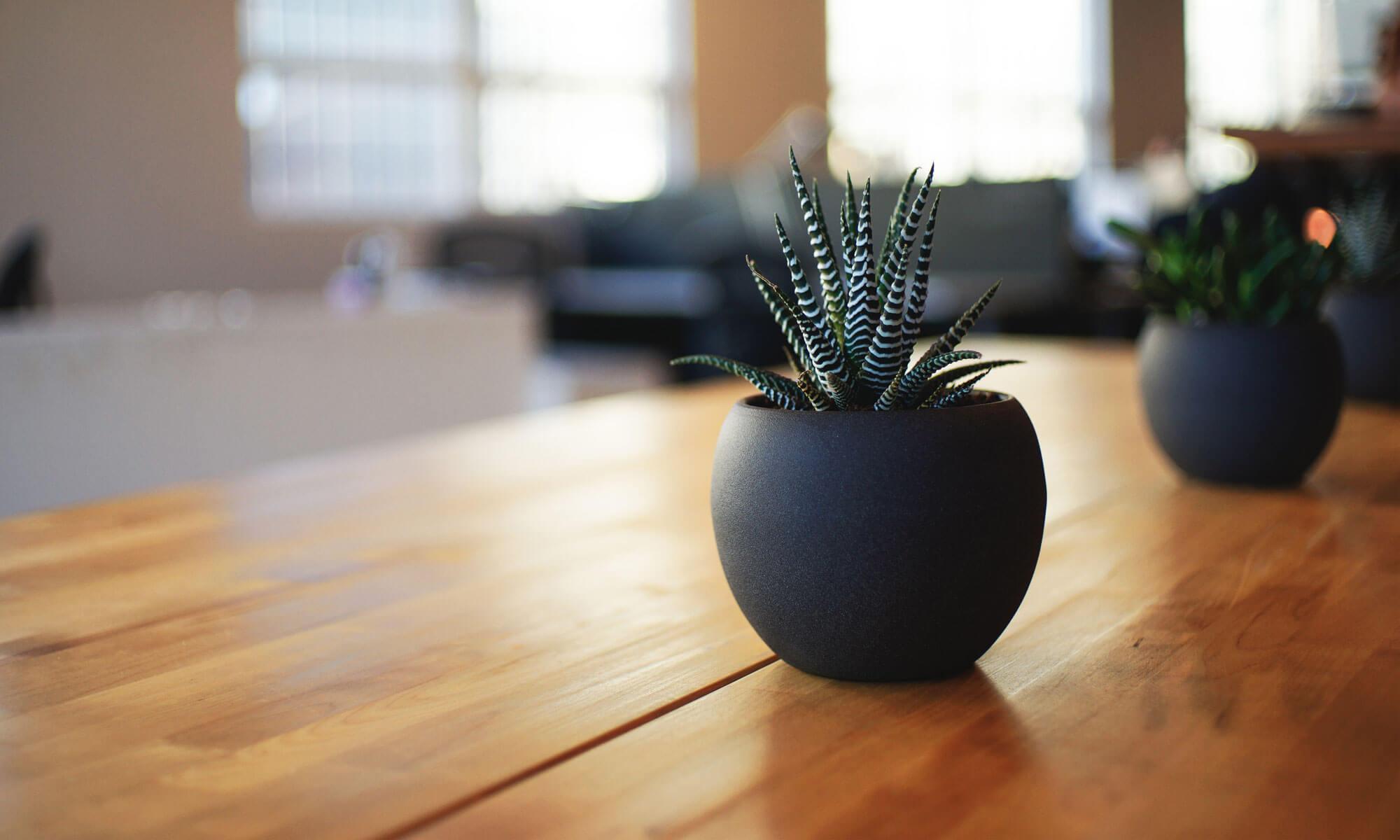
Relationships are all there is. Everything in the universe only exists because it is in relationship to everything else. Nothing exists in isolation. We have to stop pretending we are individuals that can go it alone. ~ Margaret J. Wheatley


