Ageless Wisdom Practices

Supporting Practices for The Way of Beauty

At the risk of sharing “platitudes as insights” as one journalist put it recently, there are three Beauty Practices that are old chestnuts, as my mother used to say.  They have been in the culture for a very long time, and certainly have not been identified as “Beauty Practices,” though indeed they are, as they contribute to True Beauty unfailingly.   These practices, human activities, whatever we choose to name them have endured through many civilizations and cultures because of their beneficial effect on the human body, mind and spirit — and consequently on our planet (not hyperbole).  I have come to understand these as supporting and basic to the other practices of the Way of Beauty.

I bet you know them:

Zobian family photos1)  Practice “The Golden Rule

Do unto others as you would have them do unto you.  Really, such common sense.


photo by Lisa Lindahl2)  Be still

Whether it is meditation, time in prayer or simply sitting quietly in a spot that resonates with you…find time each day to be still.  It is amazing what comes in, or what is resolved, or repaired when serene time/space is made available.


photo by Lisa Lindahl3)  Be active

Whole libraries could be filled with books written about the myriad ways in which an active body is beneficial to mind, body and spirit.  No need to re-iterate here.  I believe that the body is the temple of the soul, and so must be cared for and maintained as such.  Not always a simple task as we age, BTW.

So these are the supportive and basic three.  In “The Way of Beauty” book more is said about how they specifically support and align with True Beauty, creating greater harmony.

And a little reminder — to myself as well — these are practices.   I shall point out, as we sometimes forget:  there is no “end state” of any of these activities, though some yogis might argue with me. These are ways of being.  And as none of us (except me & thee, perhaps) are perfect, they are rarely static or constant.   I fall short a great deal, currently in the keeping my body active department.  But I do practice at it.  I do my best to practice the Golden Rule.  Being still is far easier; noticing beauty does that for me.  Practice, practice, practice.

Oh, and have fun doing so.


Being Happy – A True Beauty Practice!

Practice the Pursuit of Happiness

The happiness that is genuinely satisfying is accompanied by the fullest exercise of our faculties and the fullest realization of the world in which we live.

~Bertrand Russell

Do you see the glass half full or half empty?

“Pursuit of Happiness” – it’s in America’s Declaration of Independence, and it is an integral part of practicing Beauty. Integrating Beauty is about broadening harmony, and creating harmony has a great deal to do with each individual’s ability to understand their own experience of happiness. And that is something that has become increasingly elusive in our modern society.

So, what’s the trick?

IMG_7920 - Version 3See the proverbial glass. See it half full and half empty. See the whole glass. Cultivating happiness, and the ability to have happiness is a choice, or more correctly, a continuum of choices. But at its root, being happy
is being able to see, to observe “the whole glass” and still choose to emphasize its fullness. So we have come, quite beautifully, full circle: back to the ability to see, our first practice —  in order to have happiness, our last primary practice.

In their book How We Choose to Be Happy, Rick Foster and Greg Hicks did an impressive survey of how people achieve and maintain happiness. They were not looking for the “rose-colored glasses” kind of happiness, either.   Their subjects felt all emotions deeply. In fact, it is from the Foster/Hicks survey that the proverbial Glass metaphor is resurrected.

One of the foremost results was the uncovering of this ability by those deemed to have maintained sustainable happiness to see the glass both half full and half empty.  I.e., to see the balance in each situation, pros and cons, good and bad, and then to choose to concentrate on the positive aspects. This, according to the authors, created stable happiness.  The survey revealed that consistently happy people were far from being in denial about the less than optimum, shall we say, aspects of their lives. The paradox being that in order to experience great happiness, we must also be able to experience life’s greatest sorrows.

Hence, do we conclude that the choice to pursue happiness is, perhaps, a strategy that can carry us through all that life has to dish up?

Seeing the glass, the whole glass, is a Beautiful ability. To be aware of the complexities, of the polarities original art (c) E.Z. Lindahlnecessary to create balance bequeaths a sense of harmony to the one observing and experiencing this wholeness. To see only a part is to experience only a fragment. Having only that experience, one tends to be reflecting only a fragment; to be, perhaps, one-side, or fragmented.  Don’t we all know that person who persistently sees only the glass half-empty?  For whom there is always an issue, problem, something not quite right enough?  And then that other person, who refuses ever to see any problem, anywhere; who even as the house falls down around her/him peers through those rose-colored glasses and says “Oh, it will all be fine.  Maybe I’ll think about it tomorrow.”

To see the glass, whatever it holds and how much/little of each, is to begin to allow for the “Both/And Universe.” It allows for all the layers of Truth. It gives space for our authentic self to be still, perhaps take a moment…and choose to see a good, a learning, some positivity in the situation without denying its darkness, from which we may create and/or begin again.

Choose happiness.

To Practice Pursuing (& increasing the catch of) Happiness:

  1. Make sure you are being honest with yourself about yourself.
  2. Take responsibility for your own circumstances: you are in charge of your situation. Attitude!
  3. What feelings, specifically, do you associate with being happy?
  4. Identify those things, people and/or events, both small and big that contribute to your feelings of contentedness.
  5. Surround yourself with “higher companions,” those people who have your best interests at heart. Politely avoid those in “nay-sayer mode” (and we’ve all been there!).
  6. If you fall into a dark place for a bit, recognize it, don’t bury it. Take it out for a walk. Own it and try not to spread it around inappropriately.  Once you’ve had a good cry or rant, look further and see what’s next.  Repeat as necessary.
  7. Always remember: This too shall pass. So cherish the light and respect and endure the darkness.

Happiness is a particularly enhanced, perhaps human, state of harmony. It is an important Beauty practice. Do not think for a moment it is trivial or shallow. Some of the happiest people are the most productive.   photo by L. Lindahl

His Holiness the Dalai Lama has had a great deal to say about happiness:

“The basic thing is that everyone wants happiness, no one wants suffering. And happiness mainly comes from our own attitude, rather than from external factors. If your own mental attitude is correct, even if you remain in a hostile atmosphere, you feel happy. …

When we feel love and kindness toward others, it not only makes others feel loved and cared for, but it helps us also to develop inner happiness and peace. …

Consider the following. We humans are social beings. We come into the world as the result of others’ actions. We survive here in dependence on others. Whether we like it or not, there is hardly a moment of our lives when we do not benefit from others’ activities. For this reason it is hardly surprising that most of our happiness arises in the context of our relationships with others. “

But what is happiness except the simple harmony between a man and the life he leads?

~Albert Camus

“


Create your own Sanctuary

So, mostly here I’ve been talking about how to actually practice True Beauty; how to incorporate it into everyday life.  Remember why?  To accentuate harmony, water down discordant aspects of life…create and add to the dynamics of the True Beauty that surrounds us.  While I sometimes go off on tangents (which I hope are of interest), and will again next week, this week again I bring you another Beauty Practice:

Practice Taking Sanctuary

It is in deep solitude that I find the gentleness with which I can truly love my brothers. The more solitary I am the more affection I have for them…. Solitude and silence teach me to love my brothers for what they are, not for what they say.

~ Thomas Merton

Once the purview of the somehow nefarious, the religious or those seeking political asylum, the concept of having, taking sanctuary is one that is worthy of bringing into our daily consciousness and practice.  I am speaking here of a physical place, not merely cognitive/meditative. One’s Sanctuary is a material manifestation of the Beauty state of mind. As without, so within.

Everyone needs their own safe haven from busy-ness.   A place whose sole function is to nurture serenity.  For this reason:  Create and sustain your place of sanctuary.

photo by Lisa Z Lindahl

A conscious practitioner of True Beauty must have a place to refresh, be nourished and even, sometimes, to be appreciated. Sanctuary is a place to be still; a place where harmony may be taken for granted, ultimately a place of serenity.

Sanctuary can, sometimes, be a chancy practice, or so History and Mythology would have us believe.   Avalon was invaded; Eden was lost, and Atlantis sank.   It seems virtually all the sanctuaries of old ended in cataclysm. Yet perhaps that is fitting. Perhaps it, too, is inevitable and even necessary (given the Practice of Honoring Entropy)  the reality that all physical places are prone ultimately to dissolution. Transition is a necessary part of transformation.  But the reward is worth the risk.

The point of creating Sanctuary is to have an intentionally nurturing retreat that is readily at hand. It may be your home, or a room in your home. Or a studio.   It can be a garden, or even an area in a garden. It must be beautiful, pleasing to its occupant. Virginia Woolf articulated this concept among modern women with her declaration that one must have “a room of one’s own.” I am merely underscoring the sanctity aspect of that “room;” that it must have the quality of feeling safe, comfortable and beautiful. A place where the field of potentialities opens up to you. You.

Thomas Moore, in “Care of the Soul,” speaks to this need. He points out that the root of “eco” is from the Greek oikos, meaning “home,” and that ecology is really home science, not earth science.   “Care for our actual houses, then, however humble, is also care of the soul. No matter how little money we have, we can be mindful of the importance of beauty in our homes. ” He goes on to include the earth as our home-place as well, of course; but that is not what we are focusing on here in this aspect of our “Sanctuary” practice.

Sanctuary is often, simply, our home — no matter whether we consciously  practice and nurture this fact or not. And be aware that we can create degrees of sanctuary.  Your home may be one degree, then a (private) room in it a higher degree.  Ideally, there are members of our family that support our Sanctuary.  When there is a safe place, full of supportive and known (not perfect!) people we consider family, we are truly blessed with a key Beauty component. But this takes work. And place, a sacred place – sanctuary – is a part of that work.

To create your sanctuary and practice seeking serenity within it:

  • Look around you. Is there a place in your life already that is serving as your Sanctuary and you didn’t fully realize it? If so, recognize this, and use it as such with greater mindfulness. Put up artwork or fresh flowers – intentionally add Beauty, comfort.
  • If you’re starting fresh: think about where you like to sit (or walk) and relax. Identify the quiet times and places available to you in your world. Think with your heart as well as your mind’s eye. Name it “Sanctuary”.
  • Go to your sanctuary (as sanctuary) regularly. Once a day?  At least once a week.  If it is home or within your home, this may make it easier. Go “into retreat” regularly – meaning, for instance, go home for lunch! Go sit outside. Take an opportunity to sit quietly between one project or task and another.     Observe small things. Listen. Meditate if you like, but not necessary. This is your time, your place. Time for you, with you. It is in sanctuary that Beauty most readily seeps into us, from us.
  • Allow what “sanctuary” means to you to blossom and change with you over time. Sometimes it may include others; sometimes not.

The Practice of seeking and keeping a Sanctuary is important to the sustainability of the Way of Beauty.   In order to sustain and nurture a cohesive Beauty awareness, in order to be a “cultural creative” and an agent for change in our turbulent times, it is very helpful to have a safe haven.

So: get moving, have fun, and use the K.I.S.S method in creating your sanctuary!


I love my family, my children..but inside myself is a place where I live all alone and that’s where you renew your springs that never dry up.

~ Pearl S. Buck

IMG_3223


Bit o’ History — Aestheticism

IMG_0693As I’ve mentioned before, the notion of the importance of Beauty is not new.  The Aestheticism movement of the late 1800s  in Europe and America caused quite a stir.  It posited that beauty was above concepts such as right and wrong.  Aestheticism adherents eventually evolved their own brand of elitist hierarchy, however.  I say “however” since a hierarchy to me implies a sense of righteousness, of superiority — an assumption of right-er vs. lesser, if you will.

Aestheticism was “art-centric.”  Based in the philosopher Emmanuel Kant, following the French “l’art pour l’art,” under the Aestheticism banner the concept of beauty became too synonymous with art.  True Beauty is not confined to or articulated by “art” alone.  Further, in Aestheticism there is an assumption that nature’s own beauty (think composition, colors, material combinations) itself is in need of improvement through man’s orchestration.  I find this arrogant at worst, and at its best simply a developmental phase in humankind.  Or so I might like to think.

One of Aestheticism’s better known spokesmen was Oscar Wilde.  Born in 1854, Wilde lectured often and

Oscar Wilde
Oscar Wilde

vociferously on the importance of art and beauty in people’s everyday lives.  He is quoted as saying “We spend our days looking for the secret of life.  Well, the secret of life is art.”  (Once again inferring that art and beauty are synonymous).  He also said “Even a color-sense is more important in the development of the individual than a sense of right and wrong.”  Hmmm.

This movement emerged in response, in part, to the ugly influences of utilitarianism and the then newly flourishing industrial revolution.  But I see such a prominent paradox.  While proclaiming that all should have beauty/art in their everyday lives, this crowd perceived themselves as superior to the group that would come to be classified as the “working class.”  An artist, a creator of beauty was considered superior.  Yet so many of those who had previously been the “crafters” or makers of furniture, paints, metal work, woodwork, fine art glass, etc. — many of them were now in the factories.  But , oh!, were no longer considered to have enough “taste” to appreciate “The Arts” as conceived by Aestheticism’s aesthetes.  While lauding art for art’s sake, Aestheticism’s adherents did not appear capable of recognizing the ubiquitous eternal nature of Beauty or the diversity of its makers and fans.

Hence, while eschewing the notions of right and wrong in favor of beauty and art on one hand, they were busily creating an elitist group and attitude that shut out entire populations based on their “everyday living” rather than on their sensibilities, talents, or (dare I say?) appreciation of art.

Aestheticism as a movement of the 19th century seems an good example of blinkered arrogance raising its nasty head in relation to the promulgation of the concept of beauty.  It started with a noble intent, yet refused the broader and spiritual component that could provide the far-reaching healing for humankind.  It had the idea correct — Beauty is transcendent — but the execution wrong.  It’s not just about “art,” and certainly not about the sculpting and supposed improvement of the wild.  It is not only about refuting the current cultural trends in morality.  It is not just “l’artiste” who can sense or create beauty.

The sheer universality of Beauty’s truth appears to have been missed by Wilde and his cohorts.  But they may have been on the right track.  Now we must make some corrections and move forward.

There is a principle in organizational development circles, “Just because an idea (or product, or process) didn’t work earlier, doesn’t mean it won’t work now.  Review and re-evaluate.”  Beauty and its transcendent nature is an idea whose time has always been, and now hopefully we are mature enough as beings, able enough and conscious enough to review, re-evaluate and go forward anew — recognizing the inherent importance of True Beauty for all: human, planet, universe.

Out beyond ideas of wrong-doing and right-doing    

There is a field    

I’ll meet you there.

When the soul lies down in that grass  

The world is too full to talk about.        

~Rumi

photo by Lisa Z. Lindahl


Practicing True Beauty – Honoring Entropy

photo by Lisa Z Lindahl“Oh this is the joy of the rose:

That it blows,

And goes!”                                               ~ Willa Cather

Rejoice, even in entropy…in darkness, in the entirety of the cyclical nature of birth, death and regeneration.  It is easy to find Beauty in the part of the cycle that is about coming into existence, growth and discovery — less so on the other end:  decay, dissolution and non-existence.  But that does not mean the harmony and serenity of Beauty are not there.

When a truth rusts, a companion betrays or your sanctuary crumbles it is time to dig into your well of courage and recognize that the cycle is evolving.  Call it Winter, transition, shadow or death — whatever resonates with you.  It is a necessary part of the only constant:  change; what I think of as the order>chaos>order cycle.

Our modern culture has tried to bury this inevitability in layers of illusion.  In earlier centuries humans tried to tame change with things like “tradition” and “norms.”  In our current techy times, change occurs so rapidly that our collective head spins, societal illusions fade and new ones form on our screens.

And, as chaos theory teaches, it is not chaos that falls from some mysteriously previous order, but order that spews forth from the primeval chaos.  The Isness gloriously and unashamedly starts with a messy, unorganized clamor.

In our lives we cycle through various versions of this many times before the death of our physical bodies.  Our spirit and personality grows and stretches, withers and shrinks at turns.  We succeed, we fail.  Sometimes we just coast.  Martial arts teach us:  to not be broken we must bend.  There is cacophony that amazingly returns to harmony.  Our bodies begin to decompose.  Some believe this only happens to each individual human once, others believe it happens repeatedly.

Whether you believe in reincarnation or salvation, the real struggle is to do all of this messy part of living with grace, to honor the entropic nature of systems, and find the Wabi Sabi elements in the transitional tableau of degradation, impermanence, change, uncertainty and the eventual emergence of what will be.

If we honor the entropy that occurs in our lives rather than resist it, if we befriend it rather than demonize it we will take a long step away from fear towards serenity, toward harmony and the Way of Beauty, in the here and the now.

photo by Lisa Z Lindahl
November’s sunflowers

To Practice Honoring Entropy:

1)  Expect it.  Since the cycle of birth-death-rebirth is inherent in all living systems, don’t pretend ti will not be an integral part of your experiences.  Plan for it even!

2)  Think compost, not mere garbage.  If it is your life circumstances that are decaying and beginning to stink, look for ways the situation might be fodder for the future.  If everything is collapsing, is it time to build anew — or plant trees?

3)  Allow for “liminal space.”  The transitory time between then & now, before & after.  It is that healing time, for scarring over.  For the field to lie fallow.  Don’t try to repair/rebuild/reconnect right away.  The result will be weak and/or ill-conceived.

4)  During the sweeter parts of the cycle, practice honing your abilities to be responsive and flexible in the face of change.  Notice those circumstance requiring dissolution of some sort (even if it is simply a gardening cycle or refreshing something in your home) and be mindful (oh, that word!) of how you respond and handle it.  (For instance:  I hate tearing out plants to make way for a new gardening season;  it doesn’t matter if they are weakly blooming, way dead, or what — I resist that part of the process.  Hmmm…)

There is no doubt that entropy is also a gateway to true Ugliness (which we have not yet discussed in this blog yet).  But we cannot allow our thinking and perceptions to fall into “auto pilot” on the nature of decay, death and ugliness any more than we can about birth, life and beauty.  Learning to truly appreciate the full cycle is part of The Way of Beauty.

photo by Lisa Z Lindahl
Vermont’s famous expression of Wabi Sabi beauty

“The pain passes, but the beauty remains.”                                                         ~ Pierre Auguste Renoir

Sweet Solstice Greetings with a bit o’ Summer Beauty

photo by Lisa Z Lindahl
Fishy Sky?
photo by Lisa Z Lindahl
Beach Bird?


 I love the cycle of summer..

photo by Lisa Lindahl


photo by Lisa Z Lindahl
Perfect peachy pie


   … in the kitchen and the art studio


photo by Lisa Z Lindahl
my palette, before clean-up
photo by Lisa Z Lindahl
Fresh baked bread


Spectacular summer skies

IMG_7516


IMG_7549


IMG_7534

IMG_7439


Oh

the

light!

photo by lisa z lindahl

Teachers

Teachers are everywhere.boys on beach

I’m not talking about the kind found in academic institutions here.  Though upon reflection I’ll not rule them out, either.  But teachers, really they are everywhere in our lives — whether we like to admit it (or recognize them) or not.

Just the other day there was a human interest sort of story in the news about these kids and their “mentors.”  It was a feel-good story of how the adult mentors had made significant differences in the children’s lives.  As I read I noticed a deep yearning inside me; it was laced with…

OMG!  Jealousy!

This made me sit there and look at myself; I reviewed an old story I’ve been telling myself, and others, for years:

When asked who my mentors and teachers have been I have always shrugged my shoulders and said, “I’ve had none.  No one,” thinking of course of the supportive, enthusiastic role-models in formative years who encourage one on.  Who say “Good job!”, who bring you roses after your 6th grade play, or arrive on your doorstep with kleenex and chocolate when that first serious relationship ends.   I could think of none in my past.  No coach, teacher…

But actually there were plenty of role-models and teachers around in my formative years… In my case I was influenced greatly by what not to do. How not to act, or be, or behave.  I endeavored to be the opposite of what was being modeled around me.  Often, the loudest lessons available to me were cautionary tales.  And as an adult, lo those many (these many) years later, I was not thinking that these qualified as the sort of mentors and teachers that I was being asked about.

I was wrong, I realized sitting there.  Teachers are everywhere when one is willing to be a student, willing to observe and extract information, integrating it and transforming it into knowledge and,  hopefully eventually wisdom.  I had been being that student.  And, too, in retrospect I must admit I was being overly dramatic.  There had been  those who gave me encouragement along the way — professors, siblings…

So, I now know/admit/recognize and declare (should anyone ask):

I have had the privilege of being “mentored” by harsh teachers who would rarely give me an inch.  By the Great Teachers of Circumstance and Illness that helped me question, helped me discover my limits and the strength of my character.  I have been blessed with sweet friendships of long-standing, where we support and learn from one another as the cycles of this life evolve.  And I have the joy of being influenced and guided by the presence of natural beauty that is there for me always, every day.  So grateful.

I am changing my story.  I have changed my story — for myself and for others who may inquire.  I have and have had powerful mentors.  Thank you to all my teachers…and I look forward to those I have yet to encounter.

Beauty saved me.      ~ Mary Oliverfrom an interview on PBS


photo by Lisa Z Lindahl

Musings from the Epileptic*


ART037So, here’s the thing:  when I am in it, I don’t know if it is real, or if I am making it up.  At least at first.  But how long does “at first” last?  How long does at first last?   See, I just noticed that I typed that twice.  I choose not to correct the mistake.  I am so good at covering up my seizure-induced confusions from the public eye.  Maybe I shouldn’t.

This a.m. I wake up feeling gloomy. beat myself up about it.  I am lazy.  don’t want to get out of bed.  slug-a-bed.   Why am I so depressed?  How much is it my weak character, how much a come-with of having epilepsy?   And isn’t that just a cop-out?  Isn’t the essential “I” that is not this body strong enough to overcome this purely physical glitch?  Or is it not simply physical?  Is there a spiritual, other-dimension aspect to this particular affliction?  I suspect the latter.  It adds to my sense of hopelessness.

I manage to finally get up, notice the day.  get dressed; start some laundry.   Need to pee.  Keep noticing that I need to pee.  That is my first indicator — noticing that I keep forgetting that I need to pee.  Living alone my body is my “other,” my witness.  Ironic.  It is at this point that I start to wonder if I am making things up.  Am I being oversensitive?  Imagining stuff that isn’t really there?  Just having morning spaciness?   Experience has taught me to try to override these doubting voices.   But it is hard.

I am wandering in circles in the kitchen.  I think I should get the hell off, away from that tile floor.  My eyes tear up.  I am hungry.  Which pull is the greater?  Fear or hunger?  I convince myself that the fear is imaginary and start boiling water for chop-chop eggs.  Put breadphoto by Lisa Lindahl in toaster, justifying the illegal carbs by the seizure activity I just denied moments ago.  Ah, the intricacies of cognitive dissonance!  All the time I am waiting for/preparing the food, I am monitoring myself. I take another pill, then am concerned that it might be the wrong kind.  I go to another bottle and take another pill.   I announce to my empty house:  “I am really sick”, and eye the tile floor again.

Now I am in my bed, belly full.  Safe.  Annoyed.  Feeling foolish and interrupted.  Apprehensive.  Nonproductive.  Will these “little seizures” escalate into a biggie?  Dunno.

I hate this crap.

This is the stuff that doesn’t make it into the radio interviews.

*I know this is a politically incorrect term these days.  I am not an “epileptic;” rather I am a whole person, one who also has a disorder (or is it now okay to say “disease”?  I can’t keep up) epilepsy.  But on mornings like the one described above, I don’t give a damn.  And I am publishing it as I wrote it on that long-ago morning.

Cultivate a Sense of Humor!

photo by Lisa Z Lindahl


Laughter is the best medicine.”        ~Anonymous

Whaddaya think?  Are we born with it, or can a sense of humor be cultivated?  I don’t know.  But I do think that paradox in general is the cosmos having a laugh.

Humor is everywhere, really.  We just have to be on the lookout for it, or choose to see the humor in a situation.  It is in the paradoxical and ironical connections.  Finding humor in a situation is an avenue of perception — a way of perceiving and understanding.

These funny-bone perceptions might be as everyday as a seagull strutting its stuff up and down a pier.  Or it could be as quirky as the time my sister and I, in the silent, stuffy and shadow-filled funeral parlor where my mother lay, sang “Whistle While You Work,” as we made a death mask of Mother’s recently embalmed face.  Giggling, we imagined the scandalized mortician lurking somewhere in the back as we worked our loving women’s magic on our mother’s remains.  We found humor within our grief.  Mother would have approved.

Less darkly, one might find merriment wearing a large, bright pink flamingo stuffed animal as a hat to dinner out with friends, or watching old Laurel and Hardy films, or making silly faces out the car window.

Humor can be physical, visual and auditory. And all of the above at once. Heck, we all know what humor is, don’t we?  Do we?  It is slapstick for one, parody for some, double entendres or nonsense words for still others.  I love witty repartee.  My brother is the all-time Champion of Punsters. Humor is in the eye of the beholder as much as is beauty.  They are both a certain vibratory level that resonates with one… or not.

And have you noticed how it is the presence of the spirit of humor (that vibration, perhaps?) that can make all the difference in how a situation feels, is perceived.  How many times have you said, “Well, you had to be there,” when re-telling what was, for you, a hilarious episode.  Like my examples above, they pale in the re-telling.  The funny-factor seems to evaporate without the inner alchemy being present in the retelling.  (I suppose that is why we are not all Seinfelds, whose magic seems to be able to resonate with so many whether in person or on TV).  It is our sensing of the field of paradox that tickles the funny bones and the spirit of fun.

Polly & Lisa006 (Small)So what does a sense of humor have to do with True Beauty?  Or practicing True Beauty?  Humor is one of the greatest teachers.  To be the one creating humor or perceiving and receiving the humorous, it delights and oft times enlightens.  Seems to me that when we are smiling and laughing we are lifted up; it is a physical response to joy.

I cannot end a discussion of the importance of humor without also addressing its dark side.  Humor is powerful, and when wielded through sarcasm, derision and ridicule it can be powerfully harmful.  There is definitely a place for parody.  British comedy has proven that “making fun of” has a sharp and clever role in showing ourselves to ourselves, being a pointed teacher.  But sarcasm can be the lowest form of humor, and the most common and popular in declining civilizations.  Gratuitous derision and ridicule too often only serve to polarize and separate, underscoring hostilities, supporting anomie.  Adding to the degradation of the human spirit.  They have no place in a Practice of Beauty.

In this world of sit-coms, zombies and vampires, I’m finding it harder and harder to find funny stuff on TV, let alone to read.  I read the funnies every day.  (Sometimes they’re funny.)  Some “go-to” reading references that I would recommend for an instant shot of ha-has are:  almost anything by Bill Bryson.  Rob Brezsny‘s “Pronoia Is the Antidote for Paranoia” is sure to make you smile, if not laugh out loud at least once.  Very contrarian to all the doom and gloom propaganda out there.  (Brezsny is the guy who writes “Free Will Astrology.”)  I liked “Pronoia” because it says (in bold) things like:

Only YOU can prevent the genocide of the Imagination!

Now, I find that funny, in a clever sort of wordy way.

To practice cultivating, nurturing and exercising your sense of humor:

1)   Notice the paradoxical and/or ironic connections that life serves up.  Smile at them; laugh at them.  Crack a joke about them.  (When I was very small I brought a stray kitten home.  When asked his name, I replied “Claude.”  I didn’t get it at first when everyone laughed.  They heard “Clawed” and thought me a very clever and funny little girl.  I didn’t let on it had been unintentional…)

2)   Let something unexpected dissolve into a humorous event rather than an inconvenient one.

3)   Choose companions who appreciate and share your brand of humor…and like to exercise it!

4)   When called for do “The 2-Minute Drill.”  This means you must put your mouth into the smile position for 2 minutes straight, without a break.  You’ll be surprised how your mood follows your mouth!photo-7

5)   Endeavor to laugh out loud once a day.  If this is proving difficult, try breaking out into song instead. Any song; relevance is irrelevant here.

6)   Read funny comics —  in the newspaper or elsewhere.  Being grown up doesn’t exclude “the funnies.”  Even read political cartoons if you have the stomach for it. They often point out paradox and irony. (The trick is to be able to laugh at them).

Humor is an instant connector.   Have fun, go practice – enjoy your own brand of the lighter side.  Laughter resides in the heart chokra; let there be light!

Odd fact:  A good belly laugh is beneficial for the lymphatic system.
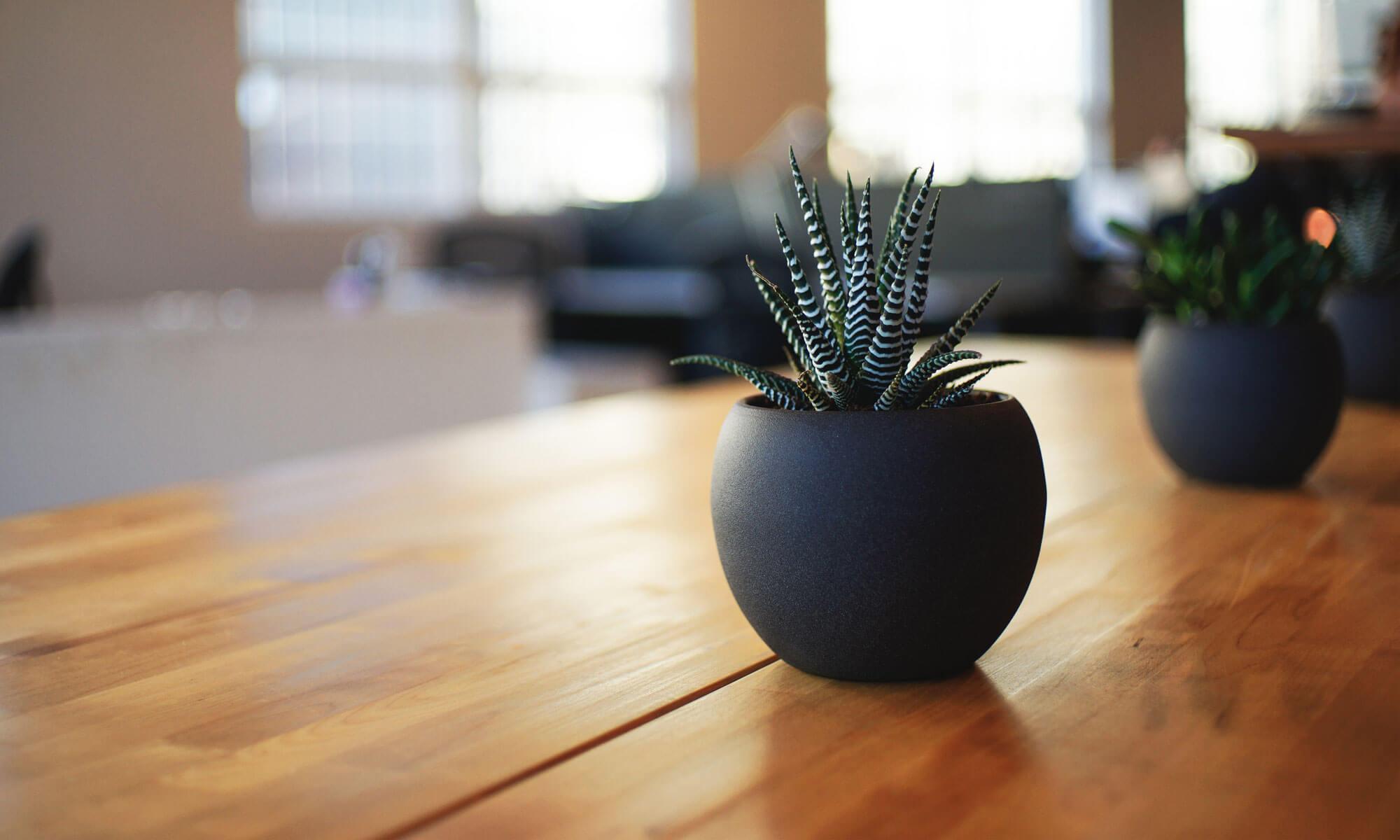
 

Follow the K.I.S.S. Method

“Simplicity is the ultimate sophistication.”        ~Leonardi da Vinci

Keep It Simple, Sweetie!

Originally I heard it with the second “S” standing for “stupid.”  I like Sweetie better.

I like to think of simplicity this way:  what is the essence?  Of a communication, task, composition — whatever life dishes up; what is the essence of what is to be accomplished, experienced or communicated?  Ask yourself this question before elaborating beyond the essential elegance that is simplicity.  Then go forward.

“Practice what you preach, O Lisa!”  It is Lou, again.  Interrupting.  “You do like to go on!  Isn’t that why you started this whole blog thing?  Man, oh man dude!  How many times have I had to listen to you tell me this, tell me that — advise me this and then that!”

After internally trying to  get over (once again) the vile use of “dude” for everyone, I don’t know whether to laugh or cringe.  Outta the mouths of babes, so to speak.  Oh, well — I keep telling him I’m not perfect.  I keep saying that in here, too.  Trial & error, trial and error.  It is a practice, after all, Sweet Lou.

Back to the point.  Elegance is a key word here.  This “simple” is not the same concept of “bare necessity” as in say, Puritanical thought — not at all!  This after all a Beauty practice.  Harmony plus simplicity equals elegance:  The K.I.S.S. equation.  A primary True Beauty equation.

In this context also we want to understand simplicity not as the opposite of complexity, but as the essence of a complexity.  Think about that for a moment:  simplicity is the essence of a complexity.  And lets not confuse confusion with complexity.  (A confusing sentence in itself.  Ah, paradox!)  They are not even in the same family!   Confusion may be the result of encountering a complexity we have not yet wrestled to the ground, so to speak, but it is not related.  Confusion may be our first clue that there is an underlying complexity of which we are not the mistress.  That we may, in fact, be missing the essential simplicity that is at the core.

Simply, to practice keeping it simple:

1)   Suss out the core of the task or experience at hand.  Identify the essence.

2)   Relax; allow it to be easy.  If there is melodrama, there is a worrier and a complicator afoot.

3)   Call on and engage your other Beauty practices:  be present/mindful.  Are there any unnecessary NISTs complicating the situation?  Get the idea?

I hope that the relationship between simplicity, at least starting in simplicity,  and True Beauty is clear.

Lou is calling me in to dinner.  He’s made a lovely salad for us! And soup! I am surprised and impressed and tell him so.  He smiles slyly at me and says, “Oh, but it is just a simple little supper!”

photo by Lisa Z Lindahl


Simplicity is about subtracting the obvious and adding the meaningful.        ~John Maeda