Once Upon A Fraud

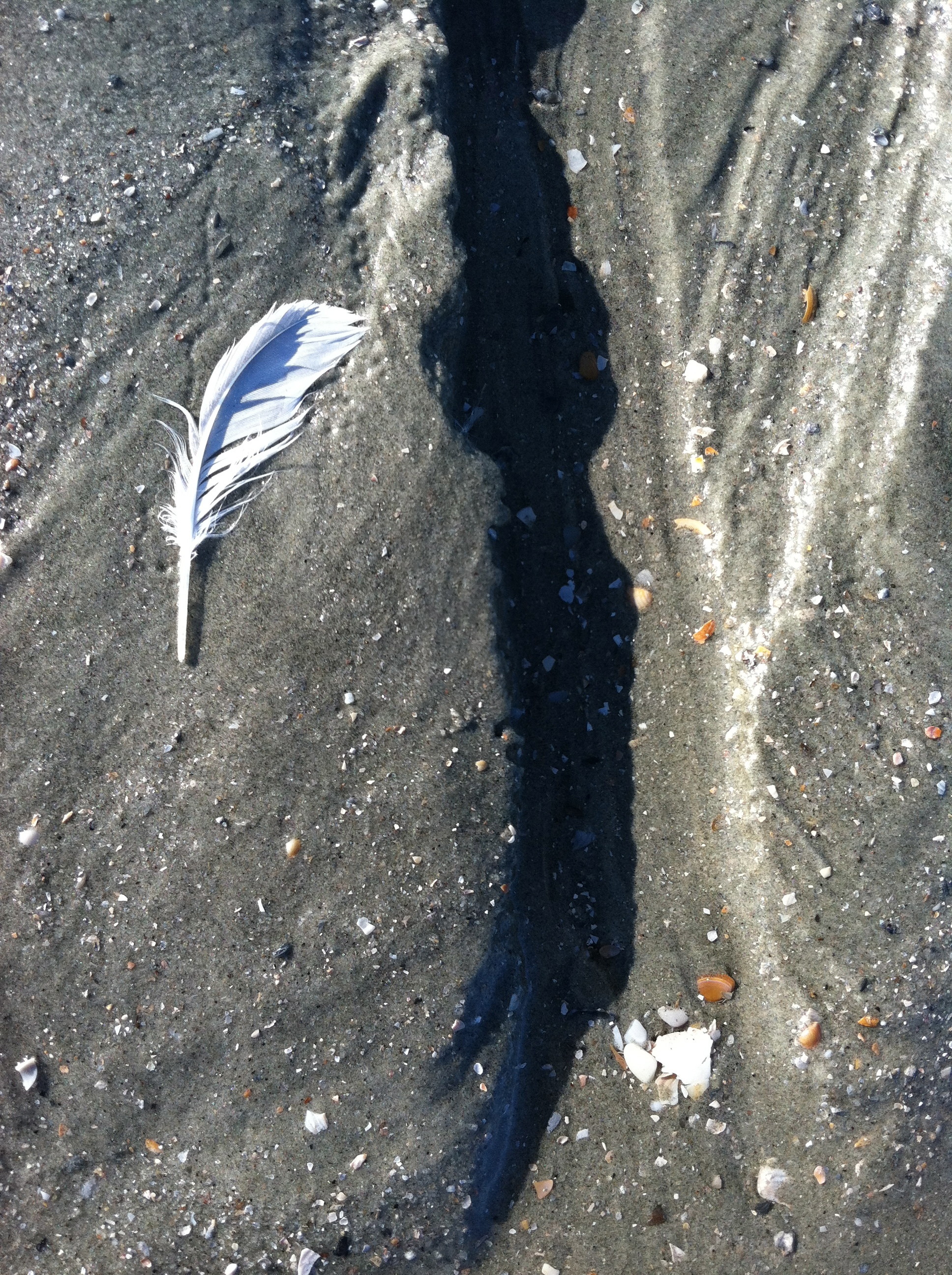
Beach Still Life photo by Lisa Lindahl

from Zobian family archivesMy mother, in her wisdom, would intone:

“Horses sweat, men perspire, women glow.”


Give me a bathing suit and point me towards ocean surf. No boards please. That was, still is, my idea of being “active.” But in my mid-twenties, living in Vermont, there was no ocean nearby. I started jogging, and found my land-based equivalent of active joy.

My running never grew into a desire to compete. Rather, running connected me to the natural world – put me back into it and became, frankly, one of my first spiritual practices. It is totally ironic that this practice spawned my financial success and exposure to the grit of the business world.

The deeper irony is that for me to start running at all was out of character, at least historically speaking. While I remember enjoying recess and dodge ball in elementary grades, by the middle grades at the girls’ school I attended I was self-conscious and uncomfortable in gym classes.   Perhaps many girls were; my best friend was.   But then there were those “jock” girls who relished gym and understood the rules of field hockey and were eager to get out on the tennis courts. They intimidated me. It seemed to me I was somehow less for not getting the whole sporty thing. When possible, I opted for Beginning Bowling as my gym class choice.

I didn’t like to glow.

So avoiding gym classes, playing around in the summertime ocean, doing some body surfing, and climbing the occasional tree was my idea of “sports.”

Until I discovered the meditation of running. Then my world did change. My body and I became more intimate. We glowed, we sweated, we gloried. When I started running I tried to jog around an indoor track – a whole quarter mile. And it was tough!   The day I actually made it all the way around I felt like I’d won an Olympic medal! I was so proud of myself!  When I eventually settled into a 30 mile a week routine over Vermont trails and back roads, well, I’d found not my sport, but my practice.

Fast forward a few years and many logged miles to my invention of the sports bra and creation of a photo by Lisa Z Lindahlbusiness around it. Because I was clear that the Jogbra was athleltic equipment, not lingerie, we were selling it in sporting goods stores around the nation.

Sporting goods stores!?

Before taking my bra into such places to sell it, I had never been in one ’til I had to buy running shoes.  And then I didn’t hang around. Heck, all I needed to do my thing was shoes and, yes, a comfortable bra.  The sporting goods industry was as foreign and intimidating to the woman I had become as those long ago gym classes were to my girlhood self. But even more so. To me sporting goods stores were rank with the culture of competition; everytime I went into one I felt I was in a totally alien environment. Yet I smiled and played the part. And I sold sports bras.

One day, back in 1988 or so, I found myself at a very large national sporting goods show. My little company was quite successful by then. I recall walking around the noisy, people-filled convention center. The aisles were lined with booths aggressively selling everything from athletic clothing to fishing rods, from dart boards to health drinks. Every athletic shoe manufacturer was there. The place was a bustling mosaic of color, people and commerce.

And I wondered: How the hell had I ended up here? I felt a complete fraud, with little in common with all these enthusiastic jocks and jock-ettes. The choices that brought me here mostly made sense at the time, and in many ways still stood the test of time.  But…?

The ironies were not lost on me. They are not lost on me still. One of the most authentic aspects of my self, the meditative runner, had spawned this persona of sporting goods queen. Bra Lady. And it follows me to this day.

The further irony is that I can no longer be that runner. Both my knees blew out. I’ve found no activity – not bowling or body surfing – that fulfills me as running did. I miss it to this day.

But I no longer feel a fraud. Years ago I read an article, in Psychology Today I think, that purported that many who gain rapid success feel “like a fraud;” that somehow they are pulling off an illusion that could be “found out” by others. I know I felt that way – I wasn’t a jock! Then, after a bit I wasn’t even a runner anymore! Egad!

The article made sense to me, explained and alleviated my secret guilt. Eventually I left the sporting goods industry; having launched the sports bra I was done.  The altruistic young entrepreneur evolved. I am still learning how to accept and integrate all the disparate bits of my ever-evolving self: artist, businesswoman, spiritual seeker, and bumbling, glowing journeyer.

footprint photo by Lisa Lindahl

Self Compassion

photo by Lisa Z Lindahl

Is it possible to have compassion for oneself?

If we understand compassion as the ability to experience another’s pain, how would it be possible to have compassion for oneself?  Don’t we just, well, have our own pain and suffering?  How is the notion of compassion for ourselves relevant?

Somehow it is.  Somehow it must be so.  It may not seem logical, but if you’ve been reading this blog for a time you know that on the Way of Beauty, reason and logic  are often outranked by the alchemical and magical forces.

And alchemy is essential in healing.  It is the changing of the metaphorical lead into gold, illness into wellness.  How we approach, hold, and release our own suffering is key to the quality of our lives.  Need I remind any of us, there is no such thing as a life without some sort and degree of sufferiphoto by Lisa Z Lindahlng?

My goal for one recent year was “Be kind to yourself, Lisa!” What did I mean? I meant, in pop parlance, to give myself a break.  In Way of Beauty terms I meant to have compassion for myself.    Too often our harshest critic is ourselves:

Only got a B+ on that exam? Shame!

Just because you had surgery last month and have been doing PT three times a week is no excuse for being behind on the month’s sales’ stats! Get with it!

Isn’t that baby fat gone yet ?!  I brought the baby home two weeks ago!

The divorce was a year ago!  Stop talking about it!  Those 20 years are in the past!

You get the picture… too often our expectations of ourselves hold little compassion, no allowance for any suffering, any expression of the pain, for any margin of error, let alone honoring the authenticity of that suffering, the recognition of the need for a necessary and healing process of  grieving, hurting.

We hold our suffering at bay, not allowing it in, feeling it, allowing it to be real, true.  I might spin off here into the need and illusions of perfectionism, but that is for later. Now we are addressing being compassionate towards ourselves, understanding and forgiving of ourselves as we go forward doing the best that we can with the information and the tools at hand under the circumstances we have created for ourselves – with the helpful knowledge that nothing is static. Life and we are evolving.

Recognize your suffering: don’t let it rule you – either by assiduously ignoring it or by placing it on the throne and becoming its servant; wallowing is not healing either.  A quick aside:  Self-pity is not the same as self-compassion.  There is a world of difference — that’s why there are different words.  Pitying someone or yourself is not a constructive act.  In our times a connotation of contempt has grown around the action of pity/pitying someone that is absent in other words that seek to address describing feeling with others.

As a teen-ager I remember my mother admonishing my moody 14-ish self: “Stop feeling so sorry for yourself!”  My older sister would taunt:  “What’s with the pity party?”  So I was taught it was not only selfish and unattractive behavior, but also I learned that it got me no where:  it was unproductive. Hmmm.  How is it some adults have somehow missed that day at “How to Be A Grown Up” school?

But I digress.

Perhaps most importantly, endeavor not to disassociate from your pain. Ironically, through compassion for yourself you will learn that it is not an other,  that “bad back” or (from my repertoire:) “stupid seizure disorder”.  It is you, part of you. There is no “it” and “me.” When feeling compassion for yourself – feeling your own pain and suffering – speak of “we.”

“Oh dear, my broken heart, what must we do to get through to the other side of this!?”

HAPPY VALENTINE’S DAY TO US!


photo by Lisa Z Lindahl


The Question of Taste …

To walk the Way of Beauty and practice True Beauty aspires to transcend our culture’s ingrained notions of “taste.”

Taste, as used here is defined in the dictionary as:

  • the sense of what is fitting, harmonious or beautiful; the perception and enjoyment of what constitutes excellence in the fine arts, literature, fashion, etc.;
  • the sense of what is seemly, polite, tactful, etc., to say or do in a given social situation
  • one’s personal attitude or reaction toward an aesthetic phenomenon or social situation, regarded as either good or bad
  • the ideas of aesthetic excellence or of aesthetically valid forms prevailing in a culture or personal to an individual

It is this last definition that concerns me, that I think of as the crippling aspect within the concept and the notion of ‘taste.’  It is this approach that I believe needs to be unlearned in order to disable our short-cut thinking and become more easily aware of True Beauty.

Think  of what you have found beautiful, and perhaps sought to elevate, honor, call attention to – “Wow! That’s so…uplifting/breathtaking/ beautiful!”…  fill in your word for the experience, for we have all experienced such a moment.   Whether the “that” in question is a particular sight, color, sound, touch, flavor, fragrance, insight, understanding, experience or combination of some or all of the above…. it doesn’t so much matter.

Whole books have been written defending, attacking and/or defining the notion of “taste” in aesthetics. Immanuel Kant, in his “Critique of Judgment” (1928) did a fine job elucidating the subjective and universal nuances in the judgment of aesthetics. David Hume went so far as to create standards for taste, and “wrote the book,” literally.   Taste, frankly,  shouldn’t be much more than a hiccup in the cosmology of True Beauty. Beauty in our new operating paradigm here is not concerned with ideas of rigid standards of “taste” except in so far as it becomes a stumbling block or a barrier for those attempting to practice True Beauty.  Hence, we must attempt some unlearning.

At some points along the way this has been difficult for me.  Because believe me, I was brought up with a healthy dose of  one must have Taste  with a Capital “T.”

This concept of taste is worthy to bring to the discussion because it is an eminent example of the kind of breach that can separate us from (true) Beauty. Separation occurs when there is the Observer and the Observed, the Maker and the Object as Other. When the idea of “taste” goes beyond simple discernment for personal choice and becomes an ethos that defines a group — indeed labels one as belonging to a certain class or level of education — then it is a very effective tool of separation.

True Beauty connects, unifies — it does not create separation.

David Hume was writing in the 1700s.  There is much worthy observation and philosophy in his treatise.  But his exploration into and need to develop standards for taste instructs me in the degree to which our understanding of Beauty had become departmentalized, rationalized by then.  And, eventually,  trivialized.

Why? I think it is because Hume’s stance, in essence, is that one’s level of  taste is based on class, education, and experience; that without these one is most likely to be vulgar and – the worst – common. That through educated experience one learns judgment and discernment.   There is truth in this; it reflects the evolution of understanding.   In my ethos, however,  this would be just fine if the discourse and its implications were strictly limited to the individual and the individual’s own choices, and not broadcast as a levels of societal worthiness, acceptability and – Beauty.

I take exception to shortcuts of perception, recipes – “standards of taste” that have in practice become “coda of beauty.” While I can appreciate the probable intention behind Hume’s book, the resultant elitism and narrowing of aesthetics have had consequences that have proved to be at least equally counterproductive.

The concept of Taste as a Definitor is the child of a civilization that has become so dependent upon appearance, the surfaces of perception and comparative values, with little to no regard for intrinsic and/or deeper values so it can no longer rely on the honest and intuitive senses of its individuals.

Further, such “standards” can be a code to create and preserve a static and deadened place-holder, so there is mere repetition of “beauty” based on a long-ago Hellenic discovery — a sad, time-worn  standard.  The freshness of beauty no longer exists.

Suffice to say for our purposes, Taste as an arbiter of Beauty does not need to enter further into a discussion of True Beauty. If my reader disagrees, I would love to hear from you.

Well, Lou has just come in and has been reading over my shoulder again. “Jeesh!” he says, “What I photo by Lisa Z Lindahlwant to taste is my lunch!  You still sitting here hitting those keys?! Come eat something with me!”

I laugh and tell Lou I will, I will.  And I silently bless my own good taste that brought his bright light into my life.

Beauty is not in the face; beauty is a light in the heart
~ Kahlil Gibran

True Quotes re True Beauty

In my travels on the Way of True Beauty I have, of course, come across some wise and pithy statements about beauty, true eternal beauty.  Here are some I’d like to share with you:

All contemporary crises can be reduced to a crisis about the nature of beauty.

                                                ~ John O’Donohue


…the perfection of Beauty is defined as being the perfection of Harmony…

                                                ~ Alfred North Whitehead


Everybody needs beauty as well as bread, places to play in and pray in, where nature may heal and give strength to body and soul.
~John Muir


Beauty is not in the face; beauty is a light in the heart
~ Kahlil Gibran


The individual human’s aesthetic response would alter the very course of history and the shape of things we live among.                                                                                                                                     ~ James Hillman


We feel most alive in the presence of the Beautiful for it meets the needs of our soul…. we come to glimpse behind the shutter of appearances the sure form of things…. Beauty brings a sense of completion and       sureness. Without any of the usual calculation, we can slip into the Beautiful with the same ease as we slip into the seamless embrace of water; something ancient within us already trusts that this embrace will hold us.                               ~ John O’Donohue


Luminous matter is the most rare stuff in our universe.  At only 4{d26b639eb74f8edb8884074db06109d949b84d3d1d14796b516693be64172811} it is precious.  It is what we and our world are made up of.  Everything is sacred.  Every thing.  Every one.                                   ~ Lisa Lindahl


And finally, another person that believes as I do, that True Beauty is the raison d’être of our Universe:

For the world is not painted or adorned, but is from the beginning beautiful; and God has not made some beautiful things, but Beauty is the creator of the universe.

                                                        ~ Ralph Waldo Emerson


If you have started to integrate the Way of True Beauty into your life, you might take one or some of these — whichever resonates strongly with you — write them out in your own handwriting and pin them up where you will see them each day.  As I am known to say, “can’t hurt, might help!”


A Practice or a Habit?

photo by Lisa LindahlSo here I have been outlining how to engage in the Practice of True Beauty.  And why.  But have you ever wondered what the differences are between a “practice” and a “habit”?

A habit is a routine.  While it may have begun with intention, it no longer needs thought behind it — it is part of one’s Automatic Pilot dashboard.  It achieves some task:  teeth get brushed.

A practice is just that – practice.  It implies “rehearsal” for something more real?, permanent?, or better done that will occur at another time/place/space.  A practice also implies it has been taken on with an intention attached to it.  Part of that intention is to improve over time.  I don’t think of my habits as necessarily having an element of improving.

A Caution about Practices

However, engaging in a practice may sometimes get in one’s way.  In his book  The Exquisite Risk, Daring to Live an Authentic Life, poet and philosopher Mark Nepo puts it well:

All the practice in the world can’t instigate enlightenment or revelation. It can only make us ready vessels for when these moments occur. … practice implies practice for something, usually a readying of the self…for the unexpected moment of life…

“vessels for…the unexpected moment of life…”   Why do we practice meditation?  Why do we introduce the practice of going to the gym each day?  We must not forget the purpose behind the practice.

“Like Uncle Sam!” Lou says.  “Remember all those times we had to eat cold Thanksgiving dinner because of waiting for him?  He was always having to get his run in after he meditated for an hour, and meanwhile the whole family had to wait for him before sitting down — and Aunt Grace seemed always to time the turkey to be ready just as he went out the door, remember?  When I was little it confused me like mad!  When I got older I was really annoyed.  Hungry!  I mean really — one day outta the year you can’t change your schedule dude?”

I commiserated with Lou, having privately thought the same thing, and wondering why his sweet wife hadn’t thought to time her meal differently — or let us go ahead without him.  Sam’s rigid meditation-cum-run devotion had not seemed to deepen his well of compassion or cooperation.  Ah, well.  Things change.  We’ve moved away and now have our own hot Thanksgiving dinner, sans Sam and Grace.  Still, I miss them, actually.

Lou is still thinking out loud about habits and practices…

“But habits — hey, we have to do something when we close down the screen, right? Before your Big Mr. Universe comes knocking at our door, beckoning us out into the cosmos! I can just see Mr. Universe! Big Hairy – oh, oh! Okay, MS. Universe. Hairy Ms. Uni — Oh! Oh! OKAY. The Universe has no gender? What?”

By this time I am hitting Lou over the head with a pillow from my chair. He squeals and runs out laughing and yelling something about pacificism and beauty and practicing what I preach.

But Lou, as usual, has a point. With the TV, computer, phone off and our automatic pilot off — that Captain of Habitual Activity — we might as well choose to intentionally practice something.  So let’s practice True Beauty. It really does include a great deal of variety: Being funny, being quiet, walking or swimming or some such, any kind of art or production, looking at everything, hanging out with friends, giving and getting some loving – not too difficult, eminently satisfactory.

For once, Lou might agree with me.

Meanwhile though, make sure that in the name of your “practice”, you are not avoiding life.  Life, with all its glory, it’s messiness, and oh yes — it’s unexpected sprouts and spouts.

photo by Lisa z Lindahl


Mrs. Smith

“Y’know, Mrs. Smith thinks you’re full of it.”

My friend Lou has just come crashing through my door with this announcement.  I look up from my keyboard and raise my eyebrows at him in what I hope is a questioning expression…  he flops down across from me.

“Well, she didn’t put it exactly that way.”

“I hope not.”

“She just said that reading your blog made her realize ‘that there were still optimists with rose-colored glasses out there in the world today. ‘  You know that tone she can use sometimes?  Then she went on to say something about most people being asleep or some such.  I dunno; I didn’t understand that part.”

photo by Lisa LindahlI am juggling annoyance, amusement and then slight amazement that Mrs. Smith would choose to share her insights with Lou.  Well, with Lou only; I love a spirited discussion.   So it occurs to me to ask,  “Lou, do you think most people are walking around sort of asleep to life & livingness, or awake and aware to it and its potential?”
Lou rolls his eyes at me.  “Jeesh!  What did I just walk in on!  A pop quiz?  What do you mean, asleep?  awake?”

“Well, they are terms that have come indicate consciousness, really.  Someone who might be referred to as “asleep” is not questioning the meaning of life, or of their life any way.  They are content with how things are; or if not content, don’t see that it can be changed or that they themselves can change.  That’s pretty much how I understand it I anyway.  To be “awake” means to be aware that there is a field of infinite possibilities out there/in here… and exploring all that means — responsibilities as well as dogma.  To me, someone that is awake is a seeker.

“Oh yeah!” Lou exclaims, “I’ve heard this riff from you before!  It’s how you justify your — whaddaya call it?– your ‘commitment to dissatisfaction?’  Always looking, looking, questioning and questioning!” We both laugh; me a bit self-consciously.  “But, okay, I get what you are trying to say:  zombies vs. guru-wanna-bes.”

Now I laugh in earnest.  Lou has such an insouciant and often on-point way of putting things.  Sometimes it can be painful.   “Yes, Lou, I guess you might say that — though it’s a bit unflattering to both parties.   Don’t you think “asleep” and “awake” is a bit better?  They are states that aren’t static, but can change from one to another and back again.  But the nomenclature isn’t the point.  I want to know what you think:  are most people asleep or awake/awakening?  What do you think?”

“Well, the people I hang out with?  Mostly awake.  Definitely.  Guru wanna-bes.  Or really, in our age group, looking for a guru if they haven’t found theirs already.   Pretty insufferable really.”

I purse my lips at him and make a face.  Really, I’m trying not to laugh yet again.  I do love Lou.  I have lots of hope for the younger generations.  But then, I may wear rose-colored glasses.

What do you think?  These days are most people asleep or awakening?

IMG_4790

Disassociating from Beauty

Losing touch…

How is it that we get separated from our engagement with True Beauty? How does it happen and what replaces it?

DSCN2636One example might be as simple as our eating mode. These days we are so separated from our food sources that children think chickens come from plastic boxes or buckets and spinach from a cellophane bag. What a shocking experience for a city kid to cut a wad of spinach from a plant or pull a carrot out of the earth, with dirt hanging from its orange self – and call each fresh and healthy! A quick wash and ready to eat! What is dirt? What is dirt-y? What is all that cement and blacktop? What is it covering up? What is ugly? What is beautiful? What is potential?  Who cares and why?

The role of Natural Beauty

The natural world is often a human being’s first introduction to and relationship with external beauty – beauty without. And in our current urban-centric, agri-business culture, most people are on a “nodding basis” only with our natural world. It is something driven by during the commute, a lawn to be mown, the subject of an ETV documentary about an exotic place, a tree in a park.  While gardening is a giant industry, and ranked a top hobby of American households, still too many souls receive and participate in too little of nature’s beauty, let alone pay attention to and participate in the magic of its cycles.

Aside from the obvious simple Beauty that a garden creates, the relationships one forms while creating and tending it – with the soil, the plant, the animals, birds, bees and insects, the weather and cycles – are enriching and enhancing. And sometimes annoying and frustrating. Can I put that bit under “character development?”

Some small but powerful practices that help re-introduce us to the rhythms of Beauty might be: turning off the TV (or getting rid of it), ceasing to get your daily “news” from the fear-mongering mass media, or making dinner for a friend once a week or so.  Sitting quietly each day (preferably outside) also ranks right up there.  The 18 Practices of Beauty review all of these possibilities.

I believe we must help ourselves and others re-learn to consciously connect with the harmonies in our lives.  With True Beauty.  It is all around us, all the time.  Look up.  Feel out.  Enjoy.

photo by Lisa Z. Lindahl


True Beauty and Epilepsy

One of the oldest chronicled disorders, Epilepsy has been steeped in stigma and myth. Those who have it IMG_0010are described as “afflicted” and often face very real forces and forms of discrimination and ridicule. I  believe this is due in great part to three basic characteristics of Epilepsy:

The first characteristic is its episodic nature; it remains hidden, “invisible” to others for what can be long periods of time.  When a seizure occurs, then, it can feel like a betrayal to both the person having it as well as anyone viewing it.  This can erode confidence.

The second is its lack of uniformity: with seizures taking so many forms it is hard to categorize and simplify.  To know “for sure” what it looks like, feels like or how it will “present” to use medical parlance.  Even in one person’s life his or her seizure type can evolve and change over time.  This undercuts predictability.

The third characteristic is its resistance to being known: there is no cure, in 80{d26b639eb74f8edb8884074db06109d949b84d3d1d14796b516693be64172811} of cases there is no known cause (called ‘idiopathic’ epilepsy) and too often medication is only partially effective. Epilepsy refuses to be controlled; it is very mysterious. This can create fear.

Betrayal, unreliablity, unpredictable, mysterious…

These characteristics are, I believe, the primary contributors to epilepsy’s stigma. People distrust what they cannot understand. They don’t like to be fooled (“She was fine just a minute ago!”) or surprised (“It all happened so quickly”) or frightened (“That convulsion was the scariest thing I ever saw; my friend looked positively possessed!”). Further, doctors and parents don’t like to be defeated when they try, repeatedly, to help. As a culture we are uncomfortable with the mysterious. And no one likes to be afraid.

What has all this to do with Beauty or a possible practice of True Beauty in everyday living?  Bear with me while I try to share the connection as it occurred for me.

After selling my entrepreneurial business to big biz of corporate America, I had a bit of time on my hands.

It transpired that I came to volunteer with the Epilepsy Foundation of America, serving on their National Board of Directors. Prior to this I’d lived quietly, privately with epilepsy all my life.  It was a surprise, therefore, to discover that there was a whole community of people active, interested and educated about epilepsy. A patient advocacy group, even!  They actually talked about it!  And I had so much to learn about epilepsy, which felt odd; a condition that had so circumscribed my life, my being so out of the loop — not even knowing there was a loop!

It also came as a surprise that I had so much to contribute to this community.  Back then the Foundation’s Board was made up mostly of medical practitioners, businessmen and some lawyers.  It turned out that I was the first “consumer” — person with epilepsy — to be elected to the board.

I loved my work there.  As a representative of the Foundation I traveled around the country as a public speaker, sort of Epilepsy’s “poster girl of success,” to educate others and raise money for various local Foundation affiliates.  Unemployment and underemployment are major issues for people with epilepsy.  My story of starting a business, working long hard hours, work-related travel, managing and inspiring employees both in-house and across the country — it was a story that flew in the face of the idea that it was difficult to employ a person with epilepsy or work around their issues.

This proved to be an important puzzle piece for me — my public participation in what had been a very private circumstance; public revelation of a private struggle.

 Action, not abstraction.   Being visible, not invisible.   Vocal, not silent.

It was not easy, at first, to find and publicly tell my “real” truth. I came to be able to articulate what I had inherently known: while not pretty, or convenient, and sometimes brutal and deadly, epilepsy nonetheless transfers its own gifts. It can confer a kind of wisdom through its particular perspective. As an alternate way into knowingness, epilepsy can be pretty efficient. To acknowledge this was a significant milestone in my spiritual perspective and development.  And I was saying out loud what many others with epilepsy inherently knew.  In facing epilepsy we become strong.  We are capable.  We are not perfect, but who is?  We are often sophisticated problem-solvers…we have to be.

In my universe, it revealed the connections as well as the distinctions between Truth and Appearances. And this distinction is a key component of True Beauty.   It was through the topic of epilepsy that I was able to make the leap from inner truth to outer connection, between revelation and the dispelling of despair. Around the topic of this ancient and misunderstood disorder I was able to articulate — first for myself, then for others – the integral uselessness of “appearances” in the face of strong self-knowledge.

It may seem obvious, but to the person struggling with the stigma attached to a seizure disorder, it is not at all obvious. Nor does self-knowledge come easily; especially when the doctors don’t have many of the answers for the physical or emotional side of the equation.  Do you know that certain types of epilepsy are believed to effect personality?  Try that confusing discussion/possibility on for size when you are a hormone-ridden, answer-seeking teen-age girl.

I hope many get it: their assumptions about epilepsy, the appearance of epilepsy need not be its truth, their truth.  The eventual truth/outcome.  When delivering speeches I would see eyes light up; hope enter in; parents laugh.  The dismantling of that assumption, that “automatic pilot” sort of thinking helped create the connection for others, I believe, between Truth, Appearance, and yes — Beauty.

It was humbling to realize that it was in part my story, my experience that held power for others.   That to hear me — one of “them” – gave hope and inspired courage. Further, my marketing and communications expertise, garnered over the years in the business world, now allowed me to help the Foundation re-frame and re-tell the story of Epilepsy; undo some of the preconceived notions that have been handed down generation after generation.

Through the experience of having seizures I have been exposed to and learned so much. To name a few: altered states of consciousness that led to deeper understandings; the ephemeral nature of my own existence; confrontation of one’s own fears – real, imagined and a combination of two; the poignant beauty of existence; the hierarchy of importances – personal and otherwise.

The expression of my truth and being as a person with epilepsy helped to dispel stigma, brought new hope and created realizations for others. It brought light, a truth, into a dark and ignored corner.  This was, to me, a form of the beautiful.  How?  It was contributing to harmony, where before there had been discord.

Then, this sharing my life story with others and having it be meaningful to them –   what a gift! It got me thinking about how to “universalize” the lessons, about my conviction about Beauty, and how it was present elsewhere in everyday life. Had others thought about this? Written about it?

Circuitous though it may seem, it was my first inkling that Beauty could, indeed, be a practice, like meditation, or running, or…

The nine years at the Epilepsy Foundation gave me back so much more than I gave. Not to be hyperbolic, it transformed my “profane” success in the consumer-goods world into a tool for a more sacred work. I experienced a non-visual expression of Beauty on another sort of canvas. And it was powerful. It was a deeper understanding — and it has led me into what I am now calling The Way of Beauty.

Yahoooooooo!

photo by Lisa Z Lindahl


Ageless Wisdom Practices

Supporting Practices for The Way of Beauty

At the risk of sharing “platitudes as insights” as one journalist put it recently, there are three Beauty Practices that are old chestnuts, as my mother used to say.  They have been in the culture for a very long time, and certainly have not been identified as “Beauty Practices,” though indeed they are, as they contribute to True Beauty unfailingly.   These practices, human activities, whatever we choose to name them have endured through many civilizations and cultures because of their beneficial effect on the human body, mind and spirit — and consequently on our planet (not hyperbole).  I have come to understand these as supporting and basic to the other practices of the Way of Beauty.

I bet you know them:

Zobian family photos1)  Practice “The Golden Rule

Do unto others as you would have them do unto you.  Really, such common sense.


photo by Lisa Lindahl2)  Be still

Whether it is meditation, time in prayer or simply sitting quietly in a spot that resonates with you…find time each day to be still.  It is amazing what comes in, or what is resolved, or repaired when serene time/space is made available.


photo by Lisa Lindahl3)  Be active

Whole libraries could be filled with books written about the myriad ways in which an active body is beneficial to mind, body and spirit.  No need to re-iterate here.  I believe that the body is the temple of the soul, and so must be cared for and maintained as such.  Not always a simple task as we age, BTW.

So these are the supportive and basic three.  In “The Way of Beauty” book more is said about how they specifically support and align with True Beauty, creating greater harmony.

And a little reminder — to myself as well — these are practices.   I shall point out, as we sometimes forget:  there is no “end state” of any of these activities, though some yogis might argue with me. These are ways of being.  And as none of us (except me & thee, perhaps) are perfect, they are rarely static or constant.   I fall short a great deal, currently in the keeping my body active department.  But I do practice at it.  I do my best to practice the Golden Rule.  Being still is far easier; noticing beauty does that for me.  Practice, practice, practice.

Oh, and have fun doing so.


Being Happy – A True Beauty Practice!

Practice the Pursuit of Happiness

The happiness that is genuinely satisfying is accompanied by the fullest exercise of our faculties and the fullest realization of the world in which we live.

~Bertrand Russell

Do you see the glass half full or half empty?

“Pursuit of Happiness” – it’s in America’s Declaration of Independence, and it is an integral part of practicing Beauty. Integrating Beauty is about broadening harmony, and creating harmony has a great deal to do with each individual’s ability to understand their own experience of happiness. And that is something that has become increasingly elusive in our modern society.

So, what’s the trick?

IMG_7920 - Version 3See the proverbial glass. See it half full and half empty. See the whole glass. Cultivating happiness, and the ability to have happiness is a choice, or more correctly, a continuum of choices. But at its root, being happy
is being able to see, to observe “the whole glass” and still choose to emphasize its fullness. So we have come, quite beautifully, full circle: back to the ability to see, our first practice —  in order to have happiness, our last primary practice.

In their book How We Choose to Be Happy, Rick Foster and Greg Hicks did an impressive survey of how people achieve and maintain happiness. They were not looking for the “rose-colored glasses” kind of happiness, either.   Their subjects felt all emotions deeply. In fact, it is from the Foster/Hicks survey that the proverbial Glass metaphor is resurrected.

One of the foremost results was the uncovering of this ability by those deemed to have maintained sustainable happiness to see the glass both half full and half empty.  I.e., to see the balance in each situation, pros and cons, good and bad, and then to choose to concentrate on the positive aspects. This, according to the authors, created stable happiness.  The survey revealed that consistently happy people were far from being in denial about the less than optimum, shall we say, aspects of their lives. The paradox being that in order to experience great happiness, we must also be able to experience life’s greatest sorrows.

Hence, do we conclude that the choice to pursue happiness is, perhaps, a strategy that can carry us through all that life has to dish up?

Seeing the glass, the whole glass, is a Beautiful ability. To be aware of the complexities, of the polarities original art (c) E.Z. Lindahlnecessary to create balance bequeaths a sense of harmony to the one observing and experiencing this wholeness. To see only a part is to experience only a fragment. Having only that experience, one tends to be reflecting only a fragment; to be, perhaps, one-side, or fragmented.  Don’t we all know that person who persistently sees only the glass half-empty?  For whom there is always an issue, problem, something not quite right enough?  And then that other person, who refuses ever to see any problem, anywhere; who even as the house falls down around her/him peers through those rose-colored glasses and says “Oh, it will all be fine.  Maybe I’ll think about it tomorrow.”

To see the glass, whatever it holds and how much/little of each, is to begin to allow for the “Both/And Universe.” It allows for all the layers of Truth. It gives space for our authentic self to be still, perhaps take a moment…and choose to see a good, a learning, some positivity in the situation without denying its darkness, from which we may create and/or begin again.

Choose happiness.

To Practice Pursuing (& increasing the catch of) Happiness:

  1. Make sure you are being honest with yourself about yourself.
  2. Take responsibility for your own circumstances: you are in charge of your situation. Attitude!
  3. What feelings, specifically, do you associate with being happy?
  4. Identify those things, people and/or events, both small and big that contribute to your feelings of contentedness.
  5. Surround yourself with “higher companions,” those people who have your best interests at heart. Politely avoid those in “nay-sayer mode” (and we’ve all been there!).
  6. If you fall into a dark place for a bit, recognize it, don’t bury it. Take it out for a walk. Own it and try not to spread it around inappropriately.  Once you’ve had a good cry or rant, look further and see what’s next.  Repeat as necessary.
  7. Always remember: This too shall pass. So cherish the light and respect and endure the darkness.

Happiness is a particularly enhanced, perhaps human, state of harmony. It is an important Beauty practice. Do not think for a moment it is trivial or shallow. Some of the happiest people are the most productive.   photo by L. Lindahl

His Holiness the Dalai Lama has had a great deal to say about happiness:

“The basic thing is that everyone wants happiness, no one wants suffering. And happiness mainly comes from our own attitude, rather than from external factors. If your own mental attitude is correct, even if you remain in a hostile atmosphere, you feel happy. …

When we feel love and kindness toward others, it not only makes others feel loved and cared for, but it helps us also to develop inner happiness and peace. …

Consider the following. We humans are social beings. We come into the world as the result of others’ actions. We survive here in dependence on others. Whether we like it or not, there is hardly a moment of our lives when we do not benefit from others’ activities. For this reason it is hardly surprising that most of our happiness arises in the context of our relationships with others. “

But what is happiness except the simple harmony between a man and the life he leads?

~Albert Camus

“